
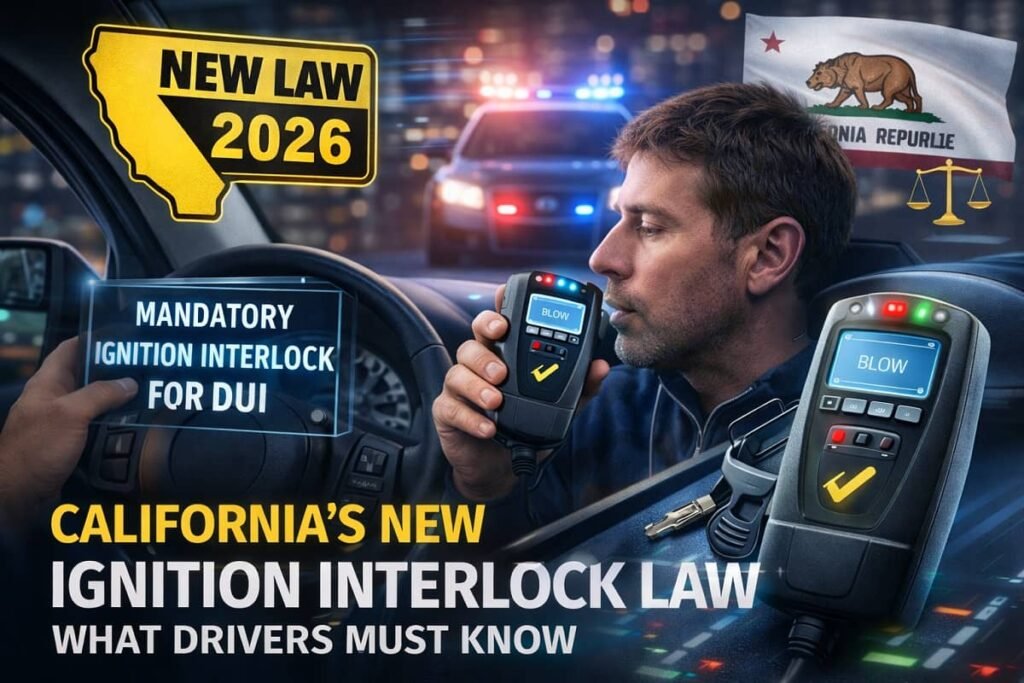
California is once again making headlines for reshaping its drunk-driving laws — and this time, the changes could affect every DUI offender on the road. With the enactment of California’s new ignition interlock law, the state has taken bold steps to expand its ignition interlock device (IID) program and extend its requirements through the next decade. The goal is clear: reduce DUI recidivism, increase public safety, and prevent tragic drunk-driving collisions that take lives and devastate families.
This article breaks down everything drivers and DUI offenders need to know about these new rules, including what the law requires, who it applies to, how ignition interlock devices work, compliance expectations, penalties for non-compliance, and potential controversies surrounding the law.
What Is an Ignition Interlock Device?
An ignition interlock device (IID) is a small breathalyzer installed in a vehicle that measures a driver’s blood alcohol concentration (BAC) before the car can start. If the device detects alcohol above a preset threshold (typically very low), the engine will not start. Some devices also require random retests while the vehicle is running to ensure sustained sobriety.
IIDs are widely viewed as effective deterrents because they require the driver to prove sobriety before operating the vehicle — not after the fact. They have been shown to significantly reduce repeat DUI offenses when installed properly and monitored appropriately.
Must Read: Can AI Stop Drunk Driving
Why This Law Matters in 2026
Beginning January 1, 2026, California’s new ignition interlock law takes effect as part of a broader suite of traffic safety measures aimed at curbing drunk driving and saving lives on the state’s highways.
At the heart of these changes is Assembly Bill 366 (AB 366), which extends and expands California’s IID requirements through at least January 1, 2033. Crucially, this law also removes much of the previous discretion courts had when requiring ignition interlocks, making them a more standard part of DUI sentencing.
The expansion reflects growing concern over the persistence of DUI-related injuries and deaths across the state, despite decades of enforcement and public education. Advocacy groups such as Mothers Against Drunk Driving (MADD) and public safety advocates have long pushed for stronger ignition interlock mandates to prevent people from driving drunk — especially repeat offenders.
Key Components of California’s New Ignition Interlock Law
1. Mandatory Installation for DUI Offenders
Under California’s new ignition interlock law, the courts are now required — not just permitted — to order ignition interlock device installation for persons convicted of DUI offenses. This includes many first-time offenders who previously might not have been subject to this requirement.
Prior to this law, courts had discretion for first-time DUI offenders (especially those without an injury), meaning interlocks were often optional or only required in certain circumstances. With the new mandates, this loophole has been closed, ensuring consistent application across the state.
2. Extended Duration Through 2033
The existing statewide ignition interlock pilot program — originally set to expire — has now been extended through at least January 1, 2033. That means offenders convicted in 2026 and beyond will face the expanded IID provisions well into the next decade.
This extension allows California to maintain a comprehensive approach to DUI prevention rather than letting the program lapse, as had been previously scheduled.
3. How Long Must the IID Stay Installed?
The duration for which an IID must remain installed varies depending on the offense severity and history:
-
First DUI offense (involving injury) — Installation typically required for a set minimum period.
-
Second DUI offense (within a certain timeframe) — Longer mandatory period.
-
Third or subsequent DUI offenses — Even longer period.
-
DUI involving death or serious injury — Extended interlock time as part of a comprehensive sentence.
These durations help ensure that high-risk drivers remain monitored and prevented from driving drunk during the highest risk years following conviction — when repeat offenses are more likely.
How Ignition Interlock Devices Work
Ignition interlock devices are relatively simple in concept but technologically sophisticated:
-
Breath Test Before Start: Before the vehicle will start, the driver must blow into the IID mouthpiece.
-
BAC Measurement: The device measures the driver’s BAC. If the BAC is above the threshold (usually well below California’s legal .08% DUI limit), the vehicle will not start.
-
Random Retests While Driving: Some devices require the driver to provide periodic breath samples while driving to ensure continued sobriety.
-
Monitoring and Reporting: IID data is typically monitored and reported to authorities or probation departments, adding accountability to compliance.
These precautions help ensure a convicted drunk driver cannot simply start the vehicle, drive a short distance, and drink further without consequence.
Costs and Financial Considerations
Installing and maintaining an IID isn’t free, and cost is a significant concern for many drivers impacted by DUI convictions. Typical fees may include:
-
Installation Fee: An upfront charge to install the device.
-
Monthly Monitoring: Regular calibration and monitoring costs.
-
Removal Fee: A cost to uninstall the IID when the restriction period ends.
Depending on the provider and region, total costs over months or years can add up. Some vendors and courts may offer financial assistance or sliding-scale programs for low-income drivers, but these vary widely and may not cover all expenses.
Eligibility and Restricted Licenses
Under the expanded IID law, DUI offenders may be eligible for a restricted driver’s license sooner if they install an ignition interlock device. This means a person can regain limited driving privileges — for example, commuting to work — so long as an approved IID is installed and functioning properly.
This approach strikes a balance between accountability and rehabilitation, allowing offenders to maintain employment and family responsibilities, while still prioritizing public safety.
Penalties for Non-Compliance
Failing to install or comply with the IID requirement under California’s new ignition interlock law can have serious ramifications:
-
Loss of Driving Privileges: The DMV may refuse to reinstate your license if you don’t install the device.
-
Fines and Jail Time: Some reports indicate fines up to several thousand dollars and potential county jail time for persistent non-compliance.
-
Charges for Violating Restrictions: Driving a vehicle without an IID during the IID restriction period may result in additional criminal penalties.
Because these consequences affect not just freedom but livelihood, drivers are strongly encouraged to comply promptly with IID orders.
Why the Law Was Expanded
Supporters of the expanded ignition interlock law argue that drunk driving remains a leading cause of traffic fatalities in California and that preventive measures save lives. MADD and other advocacy groups have championed the idea that even first-time offenders should not receive what they’ve described as a “free pass” — an opportunity to potentially reoffend without monitoring.
Research from California’s own pilot programs and ignition interlock evaluations shows that requiring these devices reduces the likelihood of repeat DUI offenses when compared with traditional suspensions alone. While not perfect, IIDs add a layer of safety that is difficult to ignore in policy circles.
Controversies and Concerns
The expansion of ignition interlock requirements has not been without critics. Some of the main concerns include:
Financial Burden
For many drivers, the cost of installation, monthly monitoring, and maintenance is a significant burden — especially for low-income individuals already struggling with DUI fines and legal fees.
Equity and Access
Opponents argue that mandatory IID requirements may disproportionately affect certain socioeconomic groups, creating a barrier to mobility and employment if devices are not affordable or accessible.
Effectiveness vs. Incarceration
While ignition interlocks are effective in reducing repeat drunk driving, some critics question whether they address underlying substance abuse issues. Many argue that education and treatment programs should be emphasized alongside device installation.
Practical Tips for Drivers in 2026
If you are navigating California’s DUI system under this new legal landscape, here are a few practical tips:
- Understand Your Requirements – Pay careful attention to the IID installation requirements, timelines, and reporting procedures outlined by the court and DMV.
- Choose a Certified Provider – Ensure your IID is installed by a certified vendor recognized by the DMV to avoid technical issues or compliance problems.
- Budget for Costs – Anticipate installation and monthly fees, and ask about payment plans or assistance options if needed.
- Keep Records – Maintain documentation of your interlock installation, calibrations, and breath tests in case there are questions later from courts or probation officers.
- Know Your Rights – If you believe an order was incorrectly issued or that financial hardship should be considered, consult an attorney experienced in DUI law for guidance.
California’s Broader DUI Law Landscape in 2026
The ignition interlock expansion is just one part of a larger set of changes affecting drivers in California. Other traffic safety laws taking effect in 2026 include increased probation terms for vehicular manslaughter while intoxicated and modified speed limits in school zones — all aimed at improving road safety across the state.
These changes underscore California’s commitment to proactive safety measures and reflect a growing trend nationwide toward evidence-based, preventive approaches to traffic law enforcement.
Final Thoughts
California’s new ignition interlock law represents a major shift in how DUI offenders are treated in the state. By expanding ignition interlock requirements, removing judicial discretion in many cases, and extending the program through 2033, California is placing a strong emphasis on prevention, accountability, and road safety.
For many drivers, this means a greater likelihood of facing ignition interlock requirements after a DUI conviction — even for first-time offenses. While the law aims to save lives and reduce repeat offenses, it also brings financial and logistical considerations that every affected driver should understand.
Staying informed, complying with court and DMV orders, and seeking legal guidance when necessary will help drivers navigate this new environment effectively while contributing to safer roads for everyone.